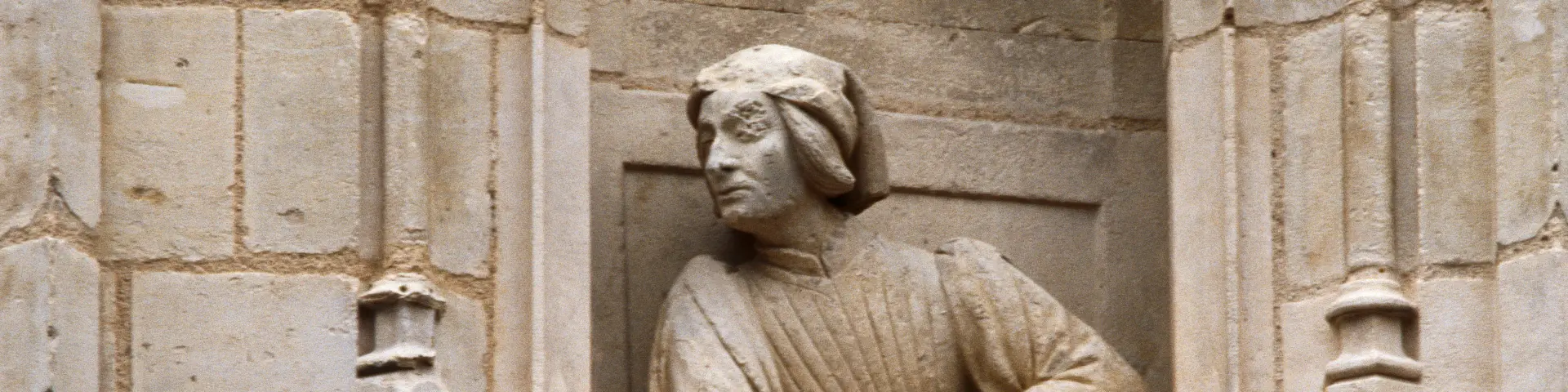
Palais Jacques Cœur|Philippe Berthé, Centre des monuments nationaux
His personal life
His childhood and his teenage years
Little is known about the early years of Jacques Cœur’s life, due to a lack of written sources that would allow us to piece together his childhood with any precision.
Around 1398, his father, Pierre Cœur, originally from Saint-Pourçain, moved to Bourges, where he worked as a furrier, that is to say, a craftsman and trader specialising in hides and furs. At that time, Bourges was a prosperous town with a particularly vibrant commercial life. Pierre Cœur married the widow of the butcher Jean Bacquelier, a union which enabled him to join the powerful butchers’ guild, one of the most influential and wealthiest of the Middle Ages. Two sons were born of this marriage: Jacques, around 1400, and then Nicolas, around 1403. The family lived near the church of Saint-Pierre-le-Marché, on Rue de la Parerie.
Jacques grew up in the neighbourhood between the Church of Notre-Dame and the palace of Duke Jean de Berry. He was educated at the school of the Sainte-Chapelle. His family were deeply Christian, as evidenced by the careers of several of his relatives: his brother Nicolas became a canon (a member of the Catholic clergy attached to a cathedral or an important church, known as a collegiate church) and two of his own sons would later enter holy orders. Throughout his life, Jacques Cœur also maintained close ties with several popes, notably Nicholas V and Callixtus III.
During his childhood, he first lived near the Church of Notre-Dame, at the foot of the ramparts, in the Rue des Toiles neighbourhood. The family then moved to the corner of Rue des Armuriers and Rue du Tambourin d’Argent, opposite the home of Lambert de Léodepart, provost of Bourges (the king’s representative responsible for administering a town or territory) and valet to Duke Jean de Berry (a role comparable to that of a chief of staff today).
Jacques Cœur grew up during a particularly difficult period. The early 15th century was marked by the Hundred Years’ War, outbreaks of the plague and acts of violence committed by the Écorcheurs and other bands of brigands. At the age of around fifteen, he witnessed the terrible French defeat at the Battle of Agincourt in 1415, which decimated a large part of the nobility and placed vast swathes of French territory under English rule. Three years later, the Dauphin Charles, the future Charles VII, forced to leave Paris following the events surrounding John the Fearless, found refuge in Berry. Settling in Bourges, he was ironically nicknamed ‘the little king of Bourges’. The presence of the royal court, however, helped to revitalise the town, fostering the development of trade and providing a favourable environment for the rise of the young Jacques Cœur.

Jean Chen Bourges in the 15th Century
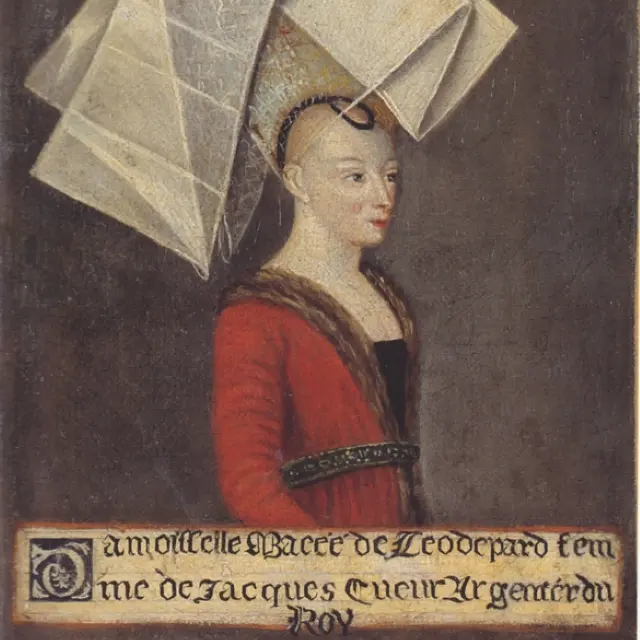
Macee De Leodepart, Musée du Berry
Her wedding
Around 1420, Jacques Cœur took the first step in his social rise by marrying Macée de Léodepart, daughter of Lambert de Léodepart.
An influential figure in Bourges, Lambert de Léodepart was initially a valet to Duke Jean de Berry, before being appointed provost of Bourges. In this capacity, he represented the king in the city, overseeing administration, the administration of justice, the collection of taxes and the maintenance of public order. His marriage to the daughter of the Master of the Mint of Bourges further strengthened his position amongst the local elite.
Thanks to this alliance, Jacques Cœur enjoyed the support of his father-in-law from a very early age, which opened the doors to business circles and the corridors of power for him. Lambert de Léodepart’s network and influence would play a decisive role in the early stages of the career of the man who was to become one of the kingdom’s greatest merchants.
His children
Jacques Cœur and his wife, Macée de Léodepart, had five known children.
- Jean (c. 1421–1483) was the most famous of the siblings. He enjoyed a distinguished ecclesiastical career and became Archbishop of Bourges.
- Henri (born c. 1429) also entered the priesthood. He served successively as a canon, dean of the chapter of Limoges Cathedral, and then as a canon of the Sainte-Chapelle in Bourges. Following his father’s death, he obtained permission from the Pope to have his remains repatriated to France.
- Geoffroy (died 1488) became the king’s cupbearer, a role involving serving drinks to a high-ranking figure. In 1443, he married Isabelle Bureau, daughter of Jean Bureau, Grand Master of Artillery to Charles VII and Lord of Monglas. It is through this branch of the family that many of Jacques Cœur’s known descendants are descended. By 2000, more than 10,000 descendants had been recorded, including the families of Vogüé, Peyronnet, La Rochefoucauld, Rohan-Chabot, La Panouse, Robien, Broglie, Guéné and Dieuleveut.
- Ravand was the only one of his sons to be directly involved in his father’s commercial activities, notably on trading expeditions to Italy and Spain. Following Jacques Cœur’s downfall, he fell out with the rest of the family and claimed before the prosecutor that he had been abandoned by his brothers.
- Perrette, the couple’s only daughter, married Jacquelin Trousseau in 1447, the son of Artault Trousseau, Viscount of Bourges and owner of the Château de Bois-Sir-Aimé, one of the residences of Charles VII and Agnès Sorel.
The archives mention only these five children. However, it is likely that Jacques Cœur and his wife had more. In the 15th century, families were often large, largely due to high infant mortality linked to epidemics and living conditions. However, in the absence of documentary evidence, this hypothesis cannot be confirmed.
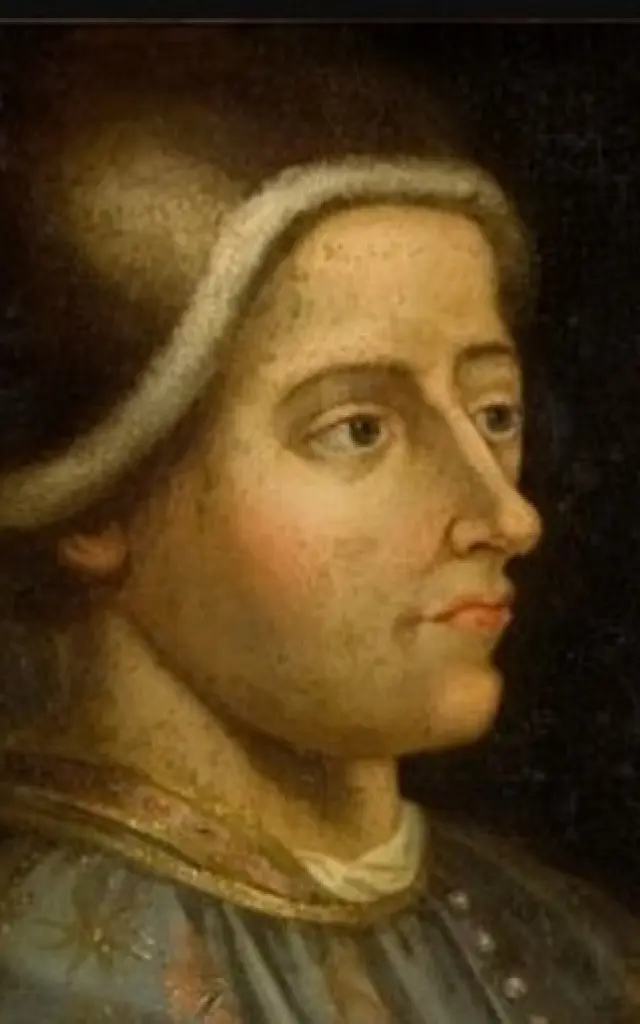
Portrait from 1653, engraved by Grignon for Godefroy’s *History of Charles VII*
His business affairs and business trips
Around 1425, Jacques Cœur ran the Bourges mint, situated near Place Gordaine, together with his partners. He undoubtedly secured this position thanks to his father-in-law, Lambert de Léodepart, who was the provost of the town, and to his father, who was a leading merchant.
In 1429, he was arrested and convicted of embezzlement in the minting of coins; he was alleged to have used less precious metal in the coins he minted. And yet, whether through family intervention or a strong defence, on 6 December 1429, King Charles VII granted him a pardon, even though he could have been sent to a dungeon or to a galley. He therefore continued to oversee the Bourges mint for several years.
1430: the first trading company
After a difficult spell, Jacques Cœur set about establishing a company in 1430 with his partners, the Godard brothers, Pierre and Barthélemy. The aim of this enterprise was to supply the king and the court with all manner of goods.
The king, who was short of funds, paid in the form of privileges, such as tax exemptions. It is at this point that we find indirect evidence of a major voyage undertaken by Jacques Cœur to the Levant – a journey that could easily have ended in disaster.
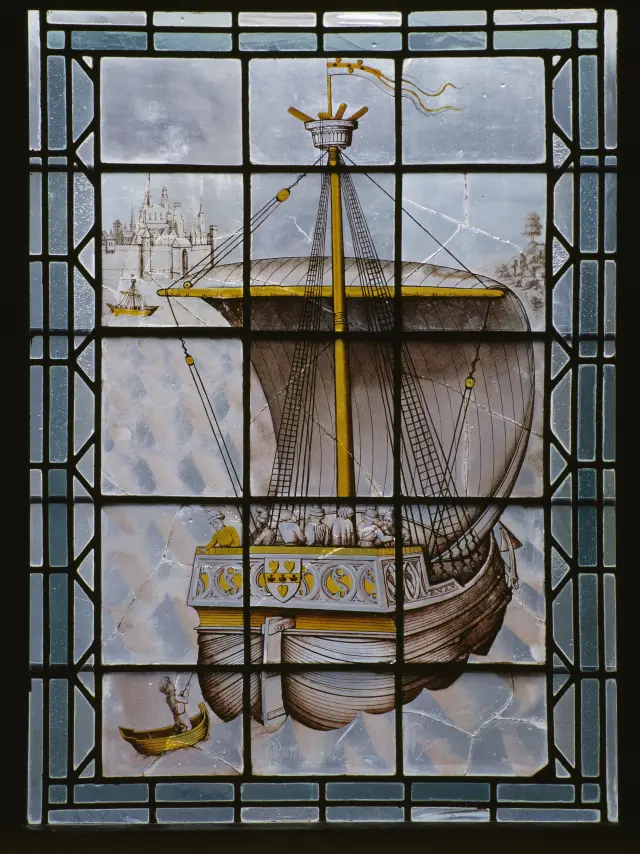
Palais Jacques Cœur|Philippe Berthé, Centre des monuments nationaux
1432: a first voyage to the Levant
In 1432, Jacques Cœur undertook his first known journey to the Levant. The reasons for this trip remain unclear: it may have been a commercial mission to lay the groundwork for his future trade with the East, a religious pilgrimage or, more likely, a diplomatic mission linked to the Duke of Burgundy’s plans for a crusade.
Setting out from Narbonne, he travelled to Beirut and then to Damascus, where he is mentioned by the Burgundian traveller Bertrandon de la Broquière. Whilst there, Jacques Cœur spent more time with Burgundian nobles involved in political missions than with merchants, which lends weight to the theory that this was a non-commercial journey.
On his return, his ship was wrecked near Calvi, in Corsica. Captured and then quickly released in exchange for a small ransom, Jacques Cœur appears at this stage to have been a merchant of little influence. Ultimately, there is no evidence to suggest that Jacques Cœur conducted any significant commercial business during this voyage. Moreover, he travelled to Beirut and Damascus rather than to Alexandria or Cairo, which were then the main centres of trade in the East. For many historians, this first voyage to the Levant therefore appears to have been more of a personal, diplomatic or exploratory mission than a genuine commercial expedition.
1432–1435: formative years
From 1432 to 1435, Jacques Cœur was gaining experience and exploring opportunities in order to lay the groundwork for the large-scale trade he envisaged, at the very time the Peace of Arras was signed in 1435 between France and Burgundy. He then went on to hold a combination of public and quasi-public offices, alongside his commercial activities.
1436: new post of Master of the Mint
In 1436, following the recapture of Paris from the English, Charles VII appointed Jacques Cœur as Master of the Royal Mint in the capital. His task was to reorganise the circulation of currency and to replace English coins with a new royal currency, reputed to be ‘of good alloy’, that is to say, of high quality and reliable value.
This post did not bring him great wealth, but it did enable him to draw closer to the king and the key figures in power. Jacques Cœur quickly established himself as a remarkable administrator. At a time when successive devaluations were undermining the kingdom’s economy, he helped to restore confidence in the currency.
To improve control over coinage production, he reduced the number of mints, tightened the regulations imposed on money changers and introduced more rigorous account management. The ordinance of 1443 was part of this drive to better organise the kingdom’s finances.
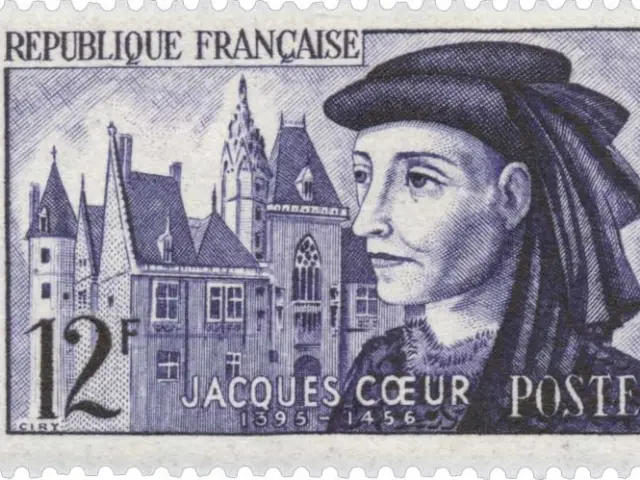
1955 Michel Ciry stamp
Charles VII’s trust in him continued to grow. Alongside his activities as a merchant and financier, Jacques Cœur was entrusted with the collection of certain taxes, notably the ‘aides’ of Berry and later those of Languedoc. He also lent substantial sums of money to the sovereign and accompanied him on several of his journeys across the kingdom, particularly in the Midi.
Thanks to his financial expertise and his close relationship with the king, Jacques Cœur gradually acquired the title of King’s Treasurer, sometimes referred to as Grand Treasurer. This role, which made him one of the principal administrators of the court’s finances, would remain closely associated with his name for many years to come.
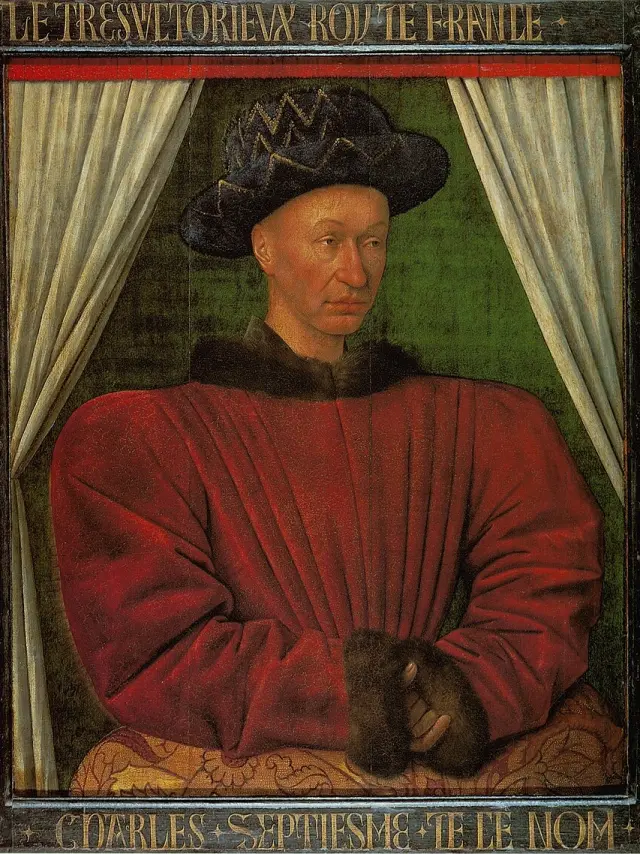
King Charles VII by Jean Fouquet, painted circa 1450–1455
1438: new post of the King’s Treasurer
In 1438, Jacques Cœur had just been appointed head of the financial department of the King’s Household known as the Argenterie, a sort of department store that supplied the court.
The role of Argentier offered Jacques Cœur a considerable advantage. As well as receiving an annual salary of 1,200 livres, he was responsible for purchasing all the supplies required by the king and the court: clothing, fabrics, precious objects, horses, weapons and even armour. Thanks to his extensive commercial network, he was able to source goods directly from his own trading posts and suppliers, and then resell these goods to the royal court. This dual role as both merchant and the king’s official purchaser formed one of the main foundations of his fortune.
In 1438, he envisaged commercial operations on a larger scale, and to this end he handed over his post as Master of the Paris Mint to Regnault de Thumezy, but negotiated that the latter should pay the new treasurer half of the profits from the Mint.
1439–1449: Jacques Cœur’s business expanded and diversified
In 1439–1440, Jacques Cœur established a major arms manufacturing and trading business in Bourges. Based in the Rue des Armuriers, he joined forces with craftsmen from Milan and Germany to produce weapons, armour and, above all, brigandines, which were highly prized by the soldiers of Charles VII. His workshops and forges were situated along the River Yévrette. Thanks to his commercial network, particularly in Genoa, he also secured major arms contracts, including an exceptional order for 3,000 suits of armour intended to prepare for the Normandy campaign.
At the same time, Jacques Cœur established a vast trading network across the kingdom. He relied on agents and trading posts set up in numerous French towns, such as Avignon, Toulouse, Bordeaux, Paris, Reims and Saint-Malo. Goods were purchased on his behalf and then transported to his main centres of operation, notably Bourges and Tours. To manage this organisation, he employed nearly 200 agents – trusted representatives tasked with looking after his interests in the various towns. Among them were Jean de Village and Guillaume de Varye, both from the Berry region. This structure operated like a fully-fledged business, with Jacques Cœur at its helm and a network of warehouses situated in strategic locations such as Lyon, Rouen, La Rochelle and Bruges.
Jacques Cœur developed major trade routes linking northern and southern Europe. One of the most important of these linked Bruges, the main trading centre of northern Europe, to Montpellier via Paris and Bourges. The convoys carried a variety of goods: spices from the Mediterranean, Flemish cloth, wool, leather and even herring.
Bruges played a vital role in this system. As a crossroads of European trade in the 15th century, the city was a major centre for commerce, marine insurance and financial transactions. Jacques Cœur’s agents bought and resold numerous goods there, destined for the French markets.Faced with the insecurity of overland routes and the high costs of transport by cart, Jacques Cœur often favoured sea routes. Goods moved between Mediterranean, Atlantic and Flemish ports before being redistributed within the kingdom.
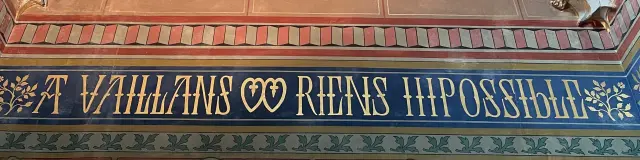
Palais Jacques Cœur|Centre Des Monuments Nationaux
1441: Jacques Cœur is ennobled
In April 1441, Charles VII ennobled Jacques Cœur for services rendered as Treasurer. This was a great achievement for him, and he took the opportunity to have his coat of arms designed featuring three hearts and three scallop shells as symbols, adopting the motto “A cuer vaillans, riens impossible” (“With a valiant heart, nothing is impossible”). He also decided to dress in accordance with the fashion of the aristocracy of the time: bright colours, shoes with spurs, pleated and padded doublets, a wide gold collar, and a black velvet cap worn over a crown-shaped hairstyle.
1441: Settlement in Languedoc
Following his ennoblement, he continued his rise to prominence and was appointed royal commissioner to the Estates of Languedoc in Toulouse. He became the direct intermediary between the king and the towns, which, on the one hand, enriched him, but, on the other, pitted him against opponents who sought to eliminate him. He became the kingdom’s tax collector for numerous major towns such as Toulouse, Carcassonne and Beaucaire. It was he who thus set the amount of the tax.
In 1442, Jacques Cœur extended his influence by securing the post of royal commissioner for Auvergne, following his appointment in Languedoc, and drew even closer to King Charles VII. Taking advantage of this position, he secured the appointment of his brother Nicolas as Bishop of Luçon. That same year, he took his first steps in diplomacy by acting as a mediator in a conflict between the Sultan of Egypt and the Republic of Venice. Finally, as a member of the Royal Drapery Commission, he helped to establish strict rules designed to guarantee the quality of fabrics – an area in which he also had a personal interest, given his cloth-making business in Bourges.
1443: Jacques Coeur, a builder working for himself
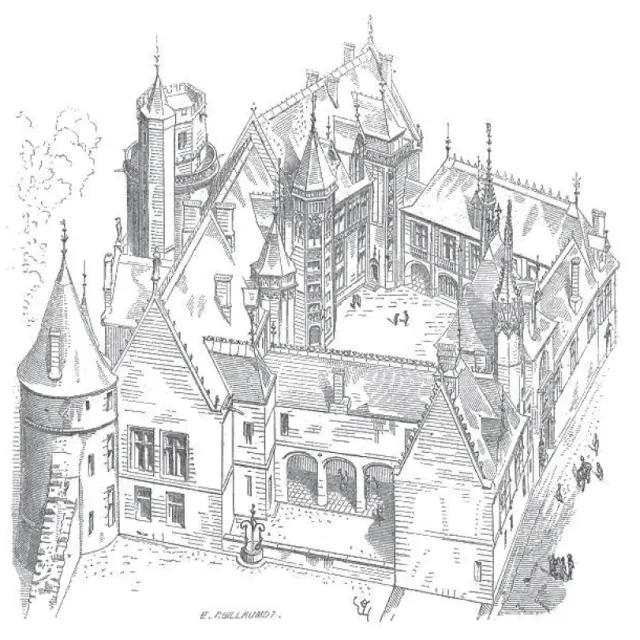
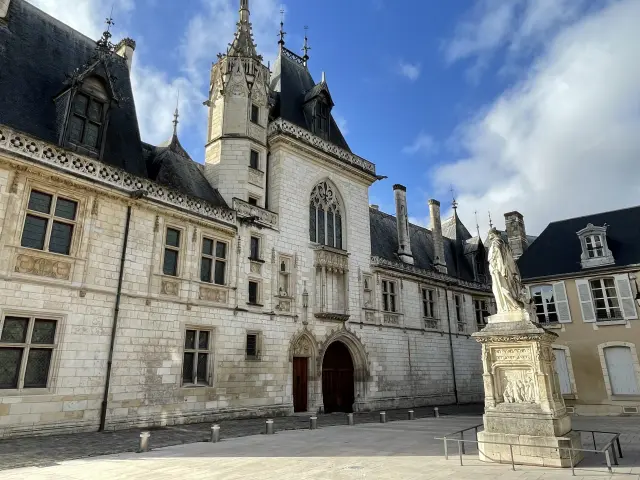
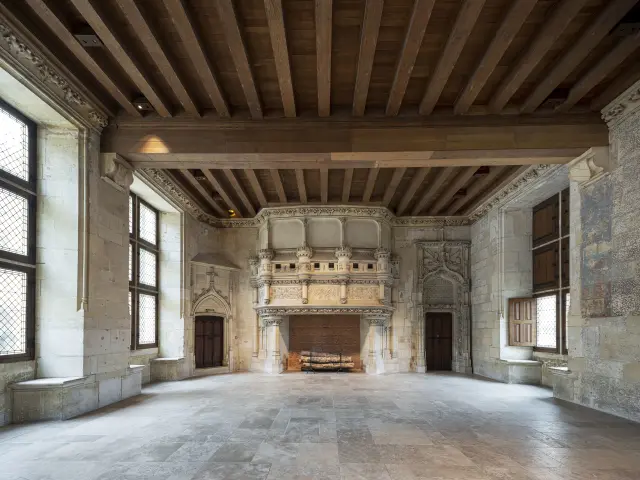
In 1443, Jacques Cœur purchased a vast plot of land measuring 5,000 m² in Bourges, situated on the site of the ancient Gallo-Roman ramparts and known as the ‘fief de la Chaussée’, with a view to building his famous ‘Grand’Maison’ there, now known as the Palais Jacques Cœur, for 1,200 gold écus.
Although he was often away from the city, he put in place a rigorous system to oversee the building work, which was entrusted to trusted associates and experienced craftsmen who had previously worked for the Duke of Berry. The materials were sourced from various regions, notably timber from Blois and Aubigny, as well as stone from Vallenay, Saint-Florent and Charly. The palace also incorporates elements of the former medieval and Gallo-Roman fortifications, bearing witness to its owner’s ambition and wealth.
Screenshot 21 July 2026 154723
Visit the Palais Jacques Cœur
Go straight to his page.
Visual 1 Flyer Palais Jacques Coeur 2026 Cmn Pjc2
Palais Jacques Cœur, Salle des festins|Patrick Tournebœuf-Tendance floue, Centre des monuments nationaux
1444: Jacques Cœur’s great year
This year marked a decisive turning point in Jacques Cœur’s rise to prominence.
Taking advantage of the Truces of Tours, which brought the fighting to a halt and encouraged economic recovery, he significantly expanded his overland trade routes. He also had his own ships built in the shipyards of the Kingdom of France, thereby strengthening his maritime network.
At the same time, he invested in several silver mines in the Lyonnais and Beaujolais regions, becoming either the owner or manager of these mines. Finally, he invested substantial capital in the silk trade and production in Italy, further diversifying his business activities.
1445: trade links develop
Between 1445 and 1449, during the Truce of Tours, Jacques Cœur sought to develop trade relations with England. On his behalf, his loyal associate Guillaume de Varye purchased leather, cloth and wool in Scotland. Some of these goods were shipped to La Rochelle, whilst the rest were transported via Bruges.
As Jacques Cœur’s long-standing representative in Geneva, Guillaume de Varye played a key role in the development of his business. Rather than setting up his own businesses, he supported already established commercial ventures, breathing new life into them and sharing in the profits. In this way, he acted more as an investment banker than as a mere merchant.
1445: Jealousy rears its head
Coming from a humble background, Jacques Cœur enjoyed a meteoric rise that aroused considerable jealousy and rivalry. Many accused him of having built his fortune through questionable methods, fuelling rumours and resentment against him. From the mid-1440s onwards, several opponents, such as Otto Castellani and the Archbishop of Reims, Jean Jouvenel des Ursins, publicly denounced his economic influence and the considerable profits he derived from his commercial activities.
Criticism intensified in particular when he shifted the centre of his business operations to Marseille, to the detriment of other commercial centres in the Midi. However, as long as Agnès Sorel, the king’s favourite, continued to support him, his enemies remained cautious. Her death marked a turning point: deprived of this protection, Jacques Cœur became far more vulnerable to attacks from his opponents.
1446: Jacques Cœur enters politics
By 1446, Jacques Cœur was no longer content merely to be a wealthy merchant and financier: he was now playing a leading political role alongside King Charles VII. Backed by Agnès Sorel, the king’s favourite, he joined the sovereign’s inner circle and acted as a diplomat in several major conflicts. In particular, he took part in negotiations between the Count of Foix and the States of Comminges, secured an agreement between the Sultan of Egypt and the Knights of Rhodes, and participated in discussions between Genoa and Venice.
That same year, a mysterious statement by Jacques Cœur appeared in a letter: ‘I know full well that the conquest of the Holy Grail cannot be achieved without me. ’ This statement testifies to his great self-confidence and the importance he attached to himself. At the height of his power, bolstered by his wealth and the king’s favour, Jacques Cœur thus appeared to wield exceptional influence over the affairs of the kingdom.
Bronze Statue, Montpellier
1446: Jacques Coeur, a builder in Montpellier
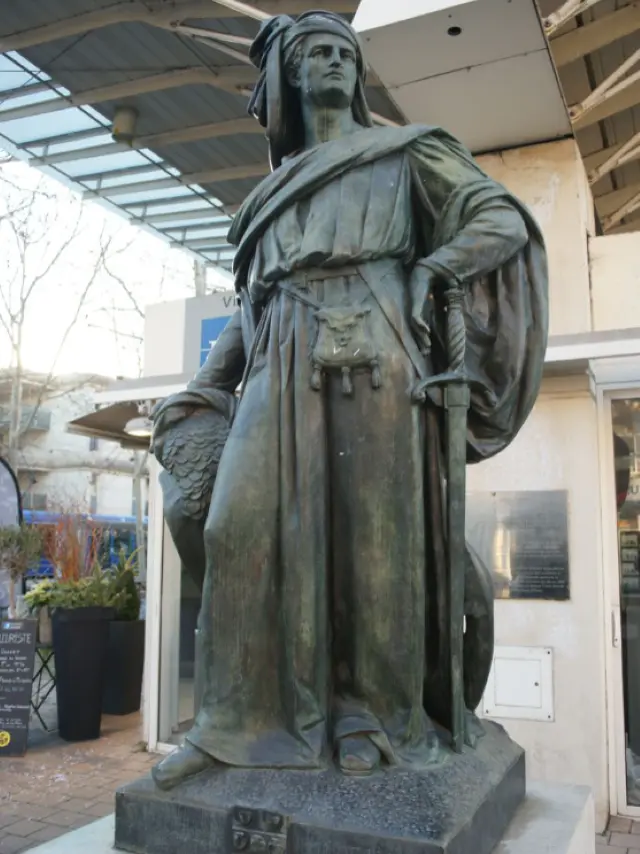
Jacques Cœur’s commercial expansion in the Mediterranean led him to make Montpellier one of the main centres of his operations. There, he had an imposing Merchants’ Lodge built, modelled on the great Mediterranean trading posts, and set up his offices and those of his representatives there. Thanks to this base, he organised the import and redistribution to the north of valuable goods from the Levant and Egypt, such as spices, sugar, cotton and silk.
Keen to strengthen maritime trade, he also helped maintain the waterways linking Montpellier to the sea. His investment helped transform the city into a major trading centre, equipped with warehouses and commercial infrastructure that was modern for its time. However, just as the Loge des Marchands was being completed, Jacques Cœur was already turning his attention to a new strategic project: the development of Marseille, the future hub of his Mediterranean network.
1446: Jacques Coeur ‘settles’ his family
Jacques Cœur maintained close ties with the Church and enjoyed significant support from the papacy. In 1446, thanks to his influence with Pope Eugene IV, he secured for his son Jean, aged just 22, the prestigious archbishopric of Bourges. The papal decision also highlighted the merits and reputation of the great treasurer.
He also fostered the ecclesiastical career of his brother Henri, who became dean of Limoges and a canon of the Sainte-Chapelle in Bourges. At the same time, Jacques Cœur further cemented his family’s social rise by marrying his daughter Perrette to Artaud Trousseau, a member of a prominent family from the Berry region. This marriage enabled him to acquire the estate of Bois-Sir-Amé, near Bourges, a symbol of the Cœur family’s integration into the kingdom’s high society.
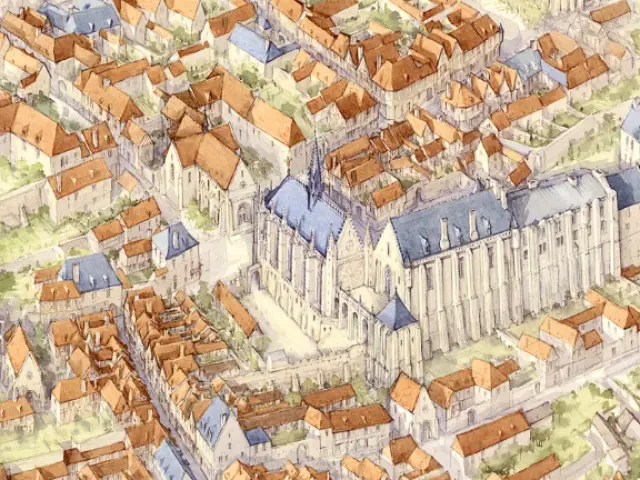
Screenshot 21 July 2026 16:17:00
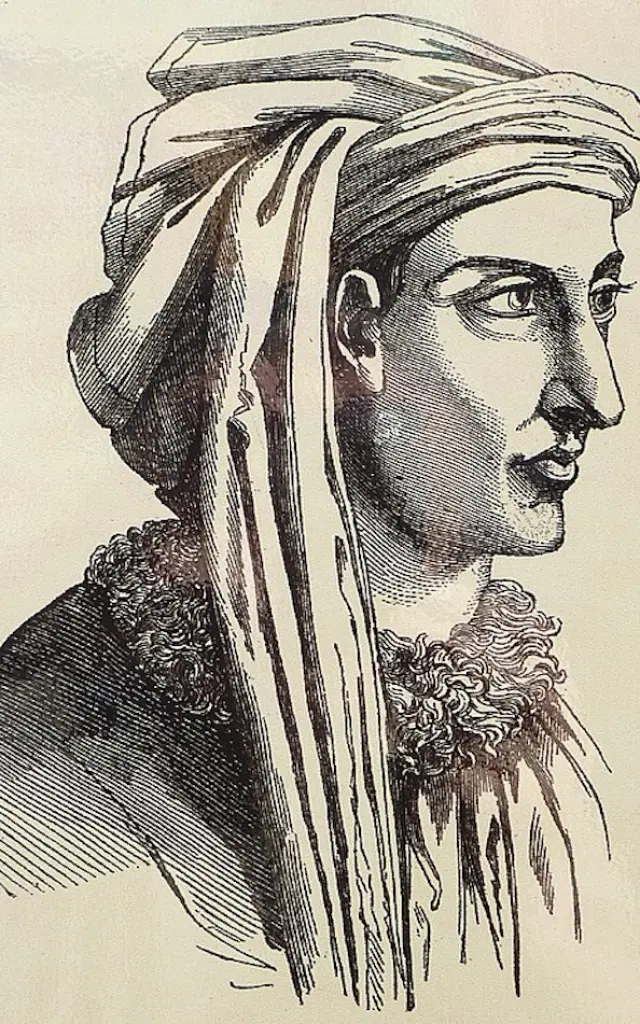
Portrait of Jacques Coeur – Tourist Information Panel, Sancerre, based on J. Cook’s engraving of 1847
1447–1450: Jacques Cœur at the height of his fame and wealth before his downfall
This period marked the height of Jacques Cœur’s influence. His wealth and prestige were recognised throughout the kingdom, whilst he enjoyed close ties with King Charles VII and the circle of Agnès Sorel. His commercial ventures were highly successful, further strengthening his influence. At the same time, he became increasingly involved in political and diplomatic affairs, where his skills as a negotiator were particularly valued. To manage his vast network, he relied on trusted associates: Guillaume de Varye ran the Argenterie in Tours, whilst Jean de Village and Antoine Noir oversaw the trade routes, trading posts and the fleet that handled trade with the Levant.
Around 1446, Jacques Cœur’s fortune reached its peak. He obtained a personal licence allowing him to trade with Muslim countries, regardless of the port used by his ships, thereby further strengthening his international business. His wealth was such that the expression ‘as rich as Jacques Cœur’ became famous.
At the head of a vast network of trade routes, trading posts and ships, he also invested in numerous properties: seigneuries, manor houses, houses, townhouses and castles. His landholdings were considerable, with several dozen estates recorded. Whilst we know of some of his possessions thanks to the inventories drawn up after his downfall, mystery still surrounds the true extent of his fortune and the possible existence of a hoard of gold, which continues to fuel the legends surrounding him.
1447: Jacques Cœur and the Dauphin Louis
In 1447, tensions between the Dauphin Louis – the future Louis XI – and his father Charles VII reached breaking point. Following an altercation with Agnès Sorel, the Dauphin was banished from court and would never see his father again. Ambitious and eager to seize power, he subsequently maintained a strained relationship with the king.
Despite this situation, Jacques Cœur remained in contact with the Dauphin. A loyal servant of Charles VII, he nevertheless granted him loans and maintained regular contact through one of his agents, Charles Astars. According to some historians, this closeness to the future Louis XI may have contributed to weakening his position and played a part in his subsequent fall from favour.
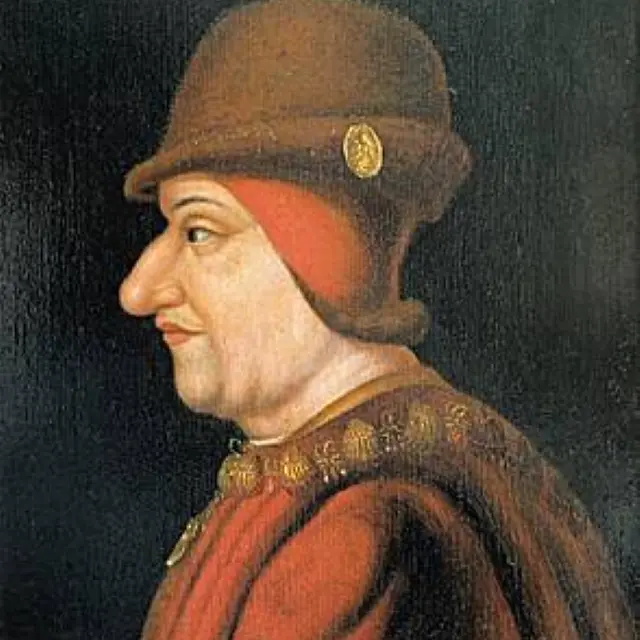
Louis XI, King of France from 1461 to 1483. Painting from the 17th-century French school
1447: Jacques Cœur becomes the ‘king’ of salt
In 1447, Jacques Cœur was appointed General Inspector of Salt Duties by King Charles VII. This post gave him an important role in overseeing the salt tax, an essential source of revenue for the kingdom’s economy. Already involved in the production and transport of salt between the Midi and northern France, he thus consolidated his influence in this strategic sector. However, this position also attracted criticism.
Some historians, such as Georges Minois, accuse him of having favoured his own personal interests by entrusting the monopoly on salt transport along the Rhône valley to close associates, such as the Villard brothers or Étienne de Cambrai, in exchange for financial benefits. These practices helped to fuel the accusations that were mounting against him at the time.
1447: Jacques Cœur acted as a negotiator during the schism between Eugene IV and Felix V
In the late 1440s, Jacques Cœur became increasingly involved in the kingdom’s diplomatic affairs. He helped secure an agreement between Charles VII and the Sultan of Egypt, notably through an embassy led to Alexandria by his representative Jean de Village, who carried rich gifts, including weapons and armour from his own workshops. This agreement also helped to ensure the security of his commercial activities in the Mediterranean. His influence with the king thus became considerable.
He also played a part in the major religious affairs of his time by taking part in negotiations relating to the schism (a rupture or separation within a Church or religious community, leading to the formation of distinct groups) between Pope Eugene IV and the antipope Felix V. As a member of a high-ranking French delegation alongside Archbishop Jean Jouvenel des Ursins, he worked towards restoring the unity of the Church. Following the death of Eugene IV, the election of Nicholas V finally resolved the crisis and strengthened the position of the pope recognised by France.
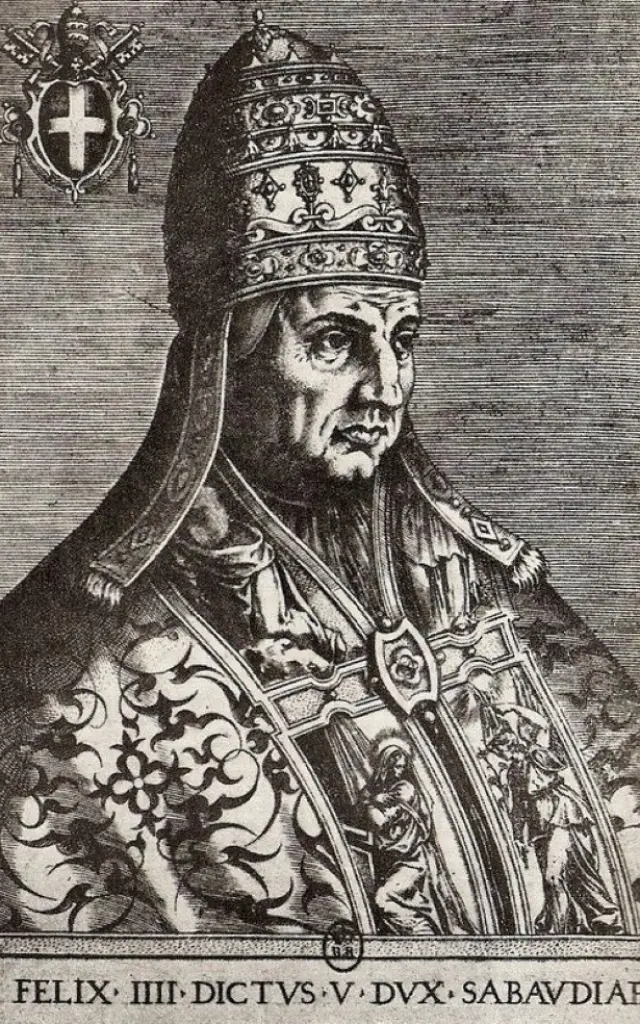
Portrait of Pope Felix V Based on an Italian Engraving, 1568
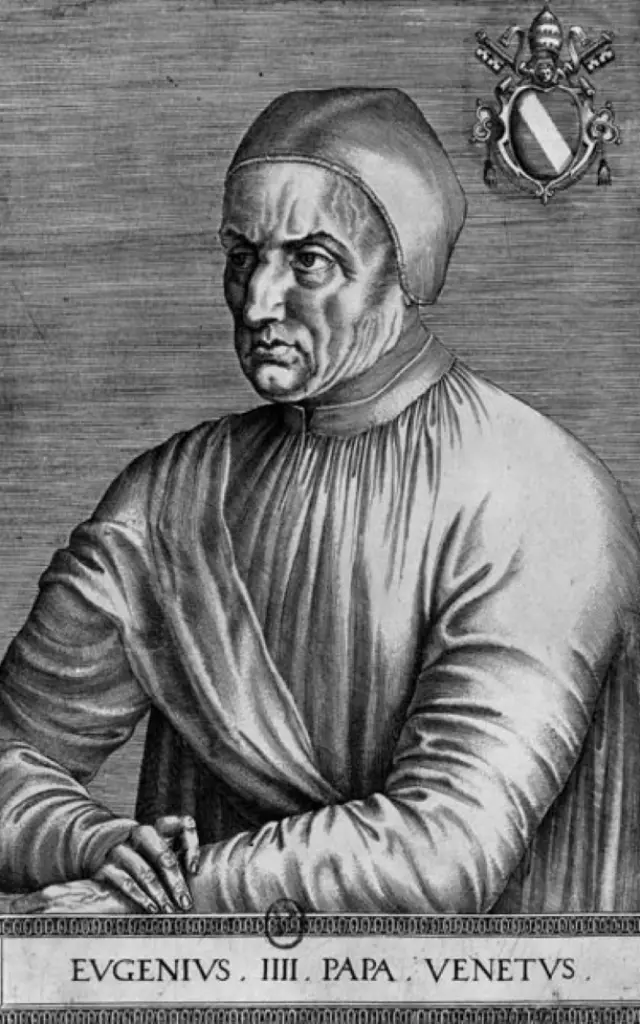
Portrait of Pope Eugene IV by Jean Fouquet, Paris, 1568
1447: still all about money – Jacques Cœur’s ‘Gros’
According to the historian Robert Guillot, the year 1447 marked a major turning point in Jacques Cœur’s career, characterised by an intensification of his activities and influence. In particular, he is said to have played an important role in the ordinance of 27 July 1447, which re-established the minting of high-quality silver coinage – the first such minting since 1370. This coin, known as the ‘gros de Jacques Cœur’, symbolised a return to a more reliable currency and helped to restore confidence in trade. Although historians still debate his exact role in this monetary reform, it—combined with the stabilisation of the kingdom and the gradual end of the Hundred Years’ War—helped to spur economic recovery.
‘Jacques Cœur’s fortune’ thus brought him great prestige amongst both merchants and the common people, who saw him as a capable and honest man, despite the criticism and controversy already surrounding his wealth and his methods. Although historians still debate his exact role in this monetary reform, it—combined with the restoration of peace in the kingdom and the gradual end of the Hundred Years’ War—helped to spur economic recovery. The ‘Jacques Cœur coin’ thus brought him great prestige among both merchants and the common people, who saw him as a capable and honest man, despite the criticism and controversy already surrounding his wealth and methods.
1448: The grand arrival of Jacques Cœur and his embassy in Rome
In order to put an end to the schism that still divided the Church, Jacques Cœur took part in a new diplomatic mission to Rome, organised with exceptional pomp and ceremony. The French delegation, comprising hundreds of richly equipped horsemen, made a profound impression on the Roman populace and the papal authorities. During delicate negotiations, Jacques Cœur played a key role in securing an agreement that led the antipope Felix V to step down in favour of Pope Nicholas V, thereby bringing the crisis to an end.
This success considerably enhanced his prestige on the international stage and earned him the new pope’s recognition. True to form, Jacques Cœur also used his influence to defend his economic interests, securing papal support in a dispute between certain communities in the Lyon region and the mining operations he owned. At that time, his power and influence were such that he was regarded as one of the most influential figures in the kingdom, whilst continuing to manage his vast commercial empire.
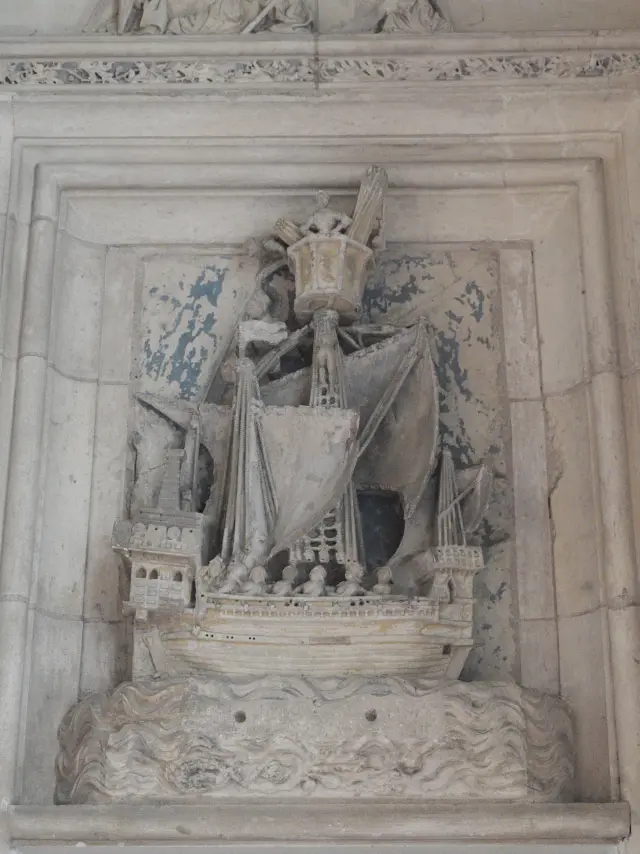
Bourges 18, Palais Jacques Coeur, Chambre Des Galees 006
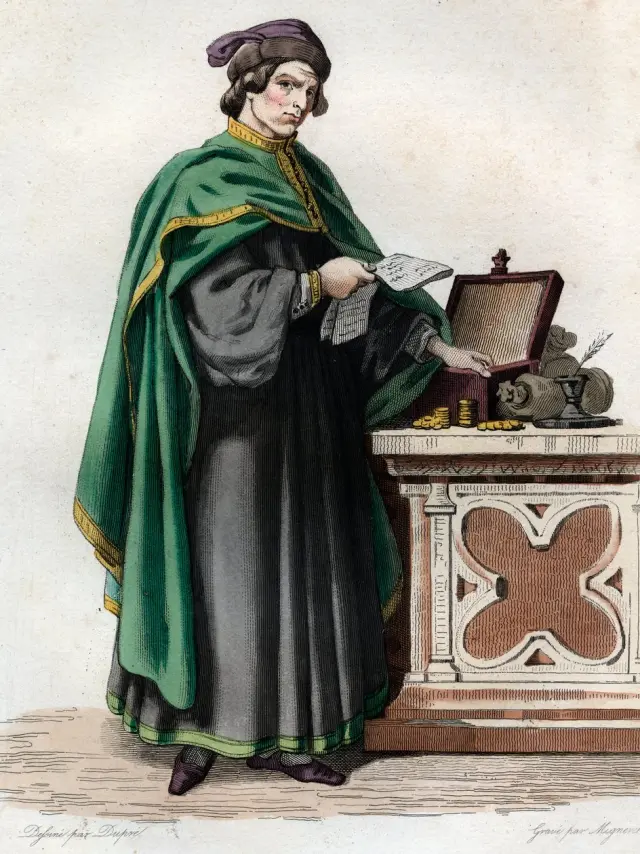
Portrait by Dupre
1450: just before the fall
By the late 1440s, Jacques Cœur had become one of the most influential figures in the kingdom of Charles VII, alongside Agnès Sorel. His intelligence, business acumen and political skill earned him a privileged position within the king’s inner circle.
Jacques Cœur, although of humble origins, rose to the very top thanks to his exceptional talents. As the king’s treasurer, he amassed an immense fortune by developing a vast maritime trade. In particular, he is regarded as the first Frenchman of his time to have organised regular trading expeditions to the East and Egypt, exporting French goods and bringing back precious commodities such as silk and spices, which were then distributed throughout the kingdom and neighbouring regions.
1450: the death of Agnès Sorel
Scientific analyses carried out on the remains of Agnès Sorel have shown that she died on 9 February 1450 from severe mercury poisoning. Researchers have ruled out several hypotheses, such as contamination from the coffin or the embalming process. Although mercury was used at the time as a medicine, particularly to treat the intestinal parasites from which she suffered, the quantity found is so high that it strongly suggests deliberate poisoning.
The examinations also reveal that Agnès Sorel was generally in good health, despite suffering from ascariasis (an infection caused by intestinal worms), which was common in the 15th century. The absence of arsenic, a poison frequently used at the time, lends further credence to the mercury theory. The identity of the perpetrator remains unknown. Several individuals have been suggested by historians, including the Dauphin Louis, the future Louis XI, who is often regarded as the prime suspect due to his hostility towards Agnès Sorel. Other names have also been put forward, such as Jacques Cœur, Étienne Chevalier and certain members of the king’s inner circle. However, there is currently no conclusive evidence to identify either the instigator or the perpetrator of this alleged poisoning.
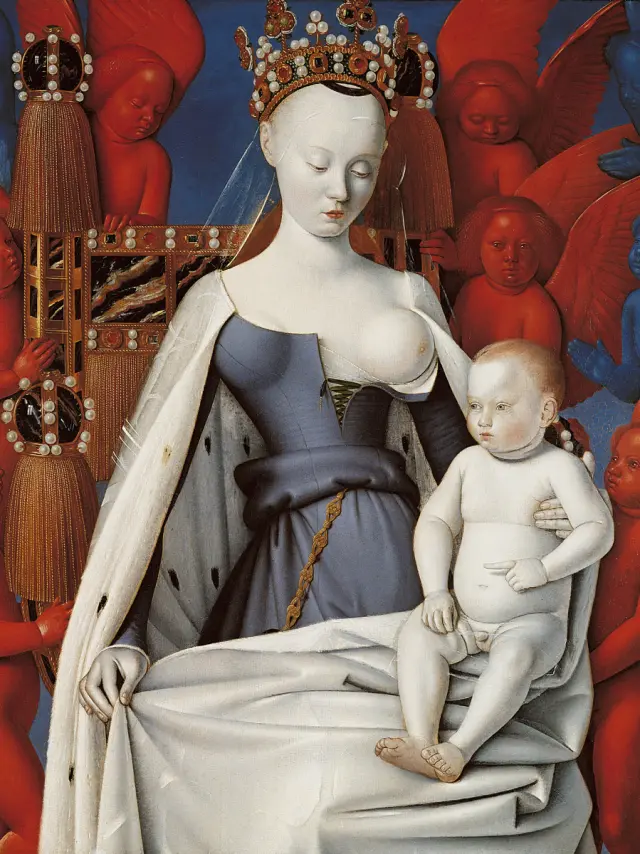
Virgin and Child, c. 1452–58, Jean Fouquet, Royal Museum of Fine Arts, Antwerp, Belgium
His conviction and death
Following a secret investigation carried out in the spring of 1451, Jacques Cœur was accused of poisoning Agnès Sorel and of committing several crimes of lèse-majesté (under the Ancien Régime, this term referred to any offence against the person of the king, his authority or the interests of the kingdom), notably the forgery of the royal seal, the counterfeiting of currency, the forgery of the king’s signature and various acts of fraud. On 31 July 1451, by order of King Charles VII, he was arrested at Taillebourg Castle and his assets were seized.
From the time of Jacques Cœur’s arrest onwards, historical sources become very abundant. Historians have at their disposal, in particular, the minutes of his trial as well as the detailed inventory of his property drawn up by the royal prosecutor Jean Dauvet. For nearly four years, Dauvet conducted an extensive investigation to catalogue, value and have all of Jacques Cœur’s possessions appraised, leaving behind an exceptional body of documentation on his fortune and activities.
However, the root causes of his downfall remain difficult to establish with certainty. The charges brought against him were numerous and, at times, implausible: the poisoning of Agnès Sorel, the production or circulation of counterfeit currency, arms trafficking with the Saracens, and various instances of financial malpractice. These charges, however, appear to mask more complex motivations.
Several factors probably contributed to his downfall. Coming from the bourgeoisie rather than the nobility, Jacques Cœur was seen as an upstart whose exceptional success aroused jealousy and resentment at court. His considerable wealth, his growing influence and the numerous loans he had granted to powerful figures earned him many enemies. Economic rivalries also played a significant role, notably the hostility of the Languedoc merchants, who were particularly active in the proceedings brought against him.
Yet there appears to be no justification for a break with King Charles VII. Jacques Cœur rendered him invaluable services by financing military campaigns, carrying out diplomatic missions to the Pope and helping to restore the kingdom’s finances. In the king’s eyes, he appeared to be an efficient administrator and a talented financier. This is why many historians now consider that his conviction stemmed more from a combination of political, economic and personal rivalries than from any serious offence actually committed against the Crown.
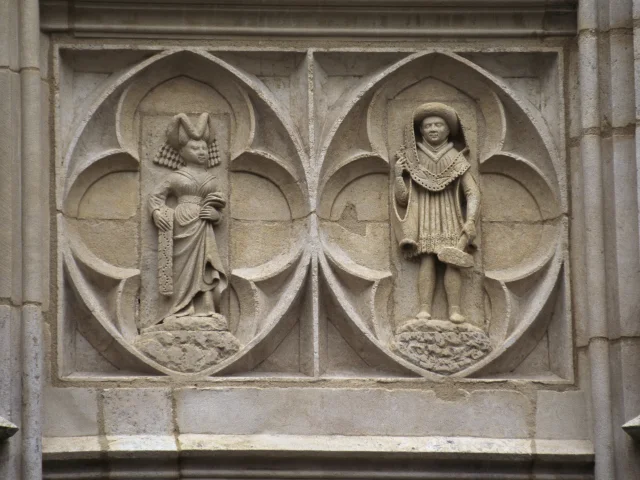
Palais Jacques Cœur|Patrick Müller, Centre des monuments nationaux
The verdict

Sculpture by Elias Robert, 1857, Paris, Louvre Palace
|
During his trial, Jacques Cœur only really contested the charge of poisoning Agnès Sorel, which was subsequently found to be unfounded. Faced with the other charges, he attempted to justify his actions on the grounds of the kingdom’s interests and the demands of trade, whilst declaring that, if subjected to torture, he would confess to whatever they wished him to say. Ultimately placing his trust in the king’s clemency, he nevertheless expressed his bitterness, believing he deserved a better reward for the services he had rendered to the Crown. On 23 May 1453, Jacques Cœur was sentenced to death.
According to some historians, Jacques Cœur’s fall from grace cannot be understood without taking into account the state of mind of King Charles VII. Deeply affected by the death of Agnès Sorel, who had been a source of support and confidence to him, the king relapsed into a period of melancholy and weakness that clouded his judgement. At the same time, his relationship with his son, the Dauphin – the future Louis XI – was extremely strained: Charles VII suspected him of plotting against him and lived in constant fear of his machinations.
However, Jacques Cœur enjoyed a good relationship with the Dauphin. No doubt out of political prudence, but also because of a shared temperament, he sought to maintain his ties with the man who seemed destined to reign one day. This closeness was probably perceived by the king as a sign of mistrust, or even treason. Against this backdrop of rivalry between father and son, this closeness would have been seen as a form of treachery, with the numerous accusations serving primarily to justify a decision that had already been taken. This hypothesis is reinforced by the fact that Louis XI, once he became king, rehabilitated Jacques Cœur and restored part of his estate to his family in recognition of the services he had rendered to the kingdom. Furthermore, Charles VII had indeed allowed Joan of Arc to die without making much of an effort to save her, and his favourite at the time, Giac, had been murdered in Dun without the king taking any offence.
1454–1456: Jacques Cœur’s escape and final journey
On 27 October 1454, Jacques Cœur escaped from his prison at the Château de Poitiers. With the help of several religious communities and his nephew Jean de Village, he managed to make his way to Provence and then to Rome in early 1455. Pope Nicholas V then granted him his protection. Although he could now have lived in safety, the king’s former treasurer chose to set out once more on a journey of adventure.
At that time, the advance of the Ottoman Empire and the ambitions of its ruler, Mehmed II, were a source of deep concern to the Christian states. Popes Nicholas V and then Callixtus III sought to mobilise the European powers to organise a crusade and strengthen the defence of the Mediterranean.
It was against this backdrop that Jacques Cœur once again assumed a leading role. Whilst the exact nature of his involvement remains a matter of debate amongst historians, he appears to have been one of the key figures in the preparations for the papal expedition. At nearly 60 years of age, he set off once more for the Levant, where he helped organise the fleet, recruit crews and carry out the operation. This final voyage, which demonstrated his undiminished taste for action and adventure, was also to be the final chapter of his life.
1455: the Pope’s armada
In September 1455, an initial fleet of 16 ships, including two galleys belonging to Jacques Cœur, set sail on a crusade under the command of Captain Pietro d’Urria, though it did not engage in any actual combat against the Turks.
A second fleet was then organised under the command of Cardinal Aloiso Trevisano d’Aquillée, appointed governor-general, with Jacques Cœur serving under him. The latter, possibly captain of one of the galleys, was accompanied by his loyal captain from the Berry region, Gimar. Finally, a third fleet of galleys built by the Pope set sail in June 1456, joining other ships at Ostia and Naples to form a fleet of around thirty vessels.
Although this expedition crossed the Mediterranean (Malta, Crete, Rhodes) and sailed from island to island in the Aegean Sea (Lemnos, Thasos, Chios), it did not result in any major engagements. The voyage was marked by the unexplained disembarkation of Jacques Cœur upon the ships’ arrival at Chios.

The Beautiful Shaded Beach at Dagia Dynami, South-West of Lille. Evgeni Dinev
1456: the death of Jacques Cœur
Jacques Cœur died on 25 November 1456 on the Greek island of Chios, at the start of a crusade against the Turks. Although his death was confirmed by the obituary in Bourges Cathedral and a papal bull, the exact circumstances of his death remain unknown. Several theories have been put forward over the centuries: some claim that he was killed or wounded during a naval battle, whilst others suggest he died of an illness, perhaps the plague. At nearly 60 years of age, weakened by his years in prison, even the slightest injury or infection could have proved fatal.
The most credible sources place his grave in the chancel of the Cordeliers Church in Chios. In 1501, Jean d’Authon reported seeing his tomb there, which was said to bear the inscription “Hic jacet Jacobus Cordis” (“Here lies Jacques Cœur”). However, the church was later destroyed by the Turks, which probably led to his remains being scattered or transferred to a mass grave.
In 1467, his son Henri (or Jean, depending on the source) obtained the Pope’s permission to repatriate the body to Bourges, but this plan never came to fruition, no doubt due to the Ottoman occupation or the son’s untimely death.
The lack of formal evidence and the extraordinary fate of the former treasurer have given rise to numerous legends. Some 17th-century accounts, refusing to believe in such a mundane end far from his homeland, imagined that he had fled to start a new life in Cyprus or that he had returned to die in secret in France, at Cuers. Even today, the fate of Jacques Cœur remains an enigma that fascinates historians, oscillating between the reality of a forced exile and the myth of an invincible knight.
What is the latest research into the death of Jacques Cœur?
The mystery surrounding the death of Jacques Cœur continues to capture the interest of historians and contemporary researchers, despite the lack of definitive material evidence. Although the theory that he died in Chios in 1456 remains the most likely, modern attempts to locate his grave or identify the exact causes of his death have come up against persistent obstacles.
Research carried out in the 20th and 21st centuries, notably by Jean-Yves Ribault, has sought to explore the possibilities of a combat injury or illness, such as the plague. However, the former treasurer’s state of exhaustion following his years in prison makes any cause of death plausible, though none can be confirmed.
Recently, physical investigations on the island of Chios have been undertaken to locate the Church of the Cordeliers, where he is said to have been buried. These searches have proved fruitless or frustrating, as was the case during Jean d’Authon’s visit or, more recently, during attempts to explore sites where the ground has been sealed by modern buildings. The mystery surrounding his death thus remains unsolved, continuing to fuel his legend to this day.
Frequently Asked Questions about Jacques Cœur
- What was Bourges like in Jacques Cœur’s time?
- Who were the kings of France from the late 14th century to the early 16th century?
- Why was Jacques Cœur a pioneer of international trade?
- Had Jacques Cœur ever met Joan of Arc?
- What did Jacques Cœur look like?
- What ships did Jacques Cœur own?
- What were Jacques Cœur’s properties?
- Did Jacques Cœur own any mines?
Legends about Jacques Cœur
The immense fortune
The secret behind Jacques Cœur’s immense fortune has long been the subject of speculation. Some have attributed it to the exploitation of the silver-bearing lead mines in the Lyonnais region, whilst others have pointed to alchemy, a discipline that was very much in vogue at the time. However, there is no evidence to suggest that his mining operations were particularly profitable, and the archives even suggest that they yielded less than expected.
The Philosophers’ Rosary: A Book on Alchemy from 1550, Published in Frankfurt
The most plausible explanation lies in his trade with the Levant. In the 15th century, the West was sorely lacking in gold but had large quantities of silver, whilst in the East the situation was the reverse. Jacques Cœur realised very early on that he could profit from this difference in value between the two metals. By exchanging Western silver for Eastern gold, and then reintroducing it into European economic circuits, he made considerable profits, sometimes estimated at nearly 100 per cent on certain transactions. This commercial activity, carried out using his ships plying the Mediterranean, is now regarded as the main source of his wealth. Some authors even suggest that he deliberately maintained an air of mystery surrounding the origin of his fortune, allowing rumours of alchemy or mining riches to circulate in order to protect a particularly lucrative business model that was difficult to replicate. Thus, rather than an alchemist or a mining magnate, Jacques Cœur was above all a visionary merchant, capable of capitalising on the economic imbalances between the East and the West.
Jacques Cœur’s extraordinary wealth gave rise to numerous legends, notably the one claiming that he possessed knowledge of alchemy or held the secret of the philosopher’s stone. This hypothesis is based on several factors: his involvement in the silver mines, his connections with metallurgists, his numerous contacts with the East – the cradle of the alchemical tradition – as well as certain symbols found in his palace in Bourges. However, there is no historical evidence to support these theories. Historians generally remain very cautious, if not sceptical, and no contemporary text directly links Jacques Cœur to the practice of alchemy. On the contrary, the few documents that touch upon the subject mainly show him exposing counterfeiting operations. His wealth seems to be explained more by his entrepreneurial skills, his international trade activities and his investments than by any alchemical secret.
Screenshot 24 July 2026 152057
Rationalist historians regard Jacques Cœur first and foremost as a businessman and entrepreneur whose fortune was derived from trade, finance and mining. Conversely, certain esoteric authors, notably Fulcanelli, see in the symbols of his palace and residences references to the Philosopher’s Stone and the alchemical tradition.
Be that as it may, even during his lifetime, Jacques Cœur became a legendary figure. His immense fortune, his spectacular rise to prominence and the mysteries surrounding his life and death have helped to fuel a myth that endures to this day. Ultimately, the mystery remains: there is no evidence to confirm that Jacques Cœur was an alchemist, but certain clues suggest that he was familiar with that world and may have taken an interest in some of its ideas. This ambiguity continues to contribute to the legend surrounding his figure to this day.
The important people in his life
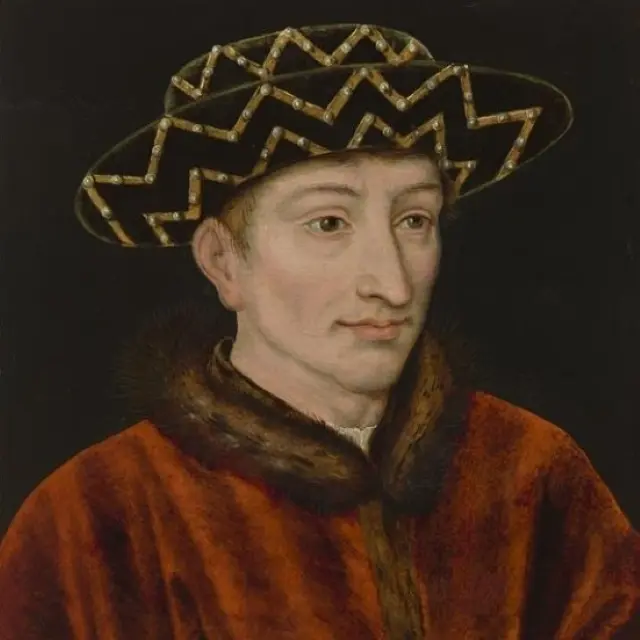
Portrait of Charles VII, King of France, Musée Condé
Charles VIIKing of France
Born in 1403, Charles VII became Dauphin in 1417 in a kingdom ravaged by the Hundred Years’ War and the conflicts between the Armagnacs and the Burgundians. Forced to flee Paris in 1418, he found refuge in Bourges, which became the centre of his power and the capital of the French resistance. Although his claim was challenged by the Treaty of Troyes of 1420, which recognised Henry V of England as heir to the crown, he was nevertheless proclaimed King of France in 1422 by his supporters. Derisively nicknamed the ‘little king of Bourges’, he prepared from the Berry region to reconquer his kingdom, supported in particular by Yolande of Aragon, and then by Joan of Arc from 1429 onwards.
Thanks to Joan of Arc’s victories, Charles VII was crowned in Reims in 1429, thereby regaining his full legitimacy. Following reconciliation with Burgundy in 1435, he gradually regained control of the kingdom and made a triumphant entry into Paris in 1437. He then modernised the state by reforming the administration, the tax system and the standing army, whilst relying on figures such as Jacques Cœur. The victories at Formigny (1450) and Castillon (1453) brought the Hundred Years’ War to an end and earned him the nickname ‘Charles the Victorious’. On his death in 1461, he left his son Louis XI a kingdom that was at peace, strengthened and permanently reorganised.
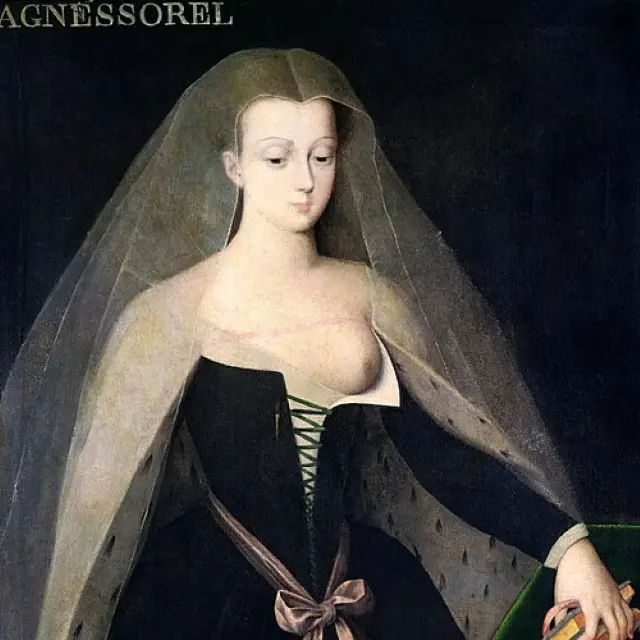
Agnes Sorel, Anonymous, 16th century 1
Agnès SorelThe King’s Favourite
Born around 1422 in Fromenteau, in Touraine, Agnès Sorel was the daughter of Jean Sorel, a member of the minor nobility, and Catherine de Maignelais. She received a particularly refined education before entering the service of Isabelle de Lorraine, the wife of René d’Anjou, as a lady-in-waiting. It was in this context, in 1443, that she met Charles VII and became his favourite. As the first official mistress of a King of France, she exerted considerable influence over the sovereign, helping to restore his confidence and consolidate his authority. Three daughters were born of their union.
Despite her humble origins, Agnès Sorel rose to a prominent position at court and actively supported Jacques Cœur, protecting his interests and enhancing his prestige. Upon her death, she named him as one of the executors of her will, a testament to their close relationship. Pregnant with her fourth child, she died in childbirth on 11 February 1450 at Jumièges, following a gruelling journey to join the king. Her death deprived Charles VII of his most loyal confidante and Jacques Cœur of his most powerful protector.
The magnificent residence that he had built in the town of Bourges (…) is so beautiful, so decorated with so many ornaments that in the whole of France, I don’t mean only in the middle aristocracy, but even because of its dimensions, even in the king’s house, one could hardly find a more magnificent residence.
15th century account by Thomas Basin, Bishop of Lisieux
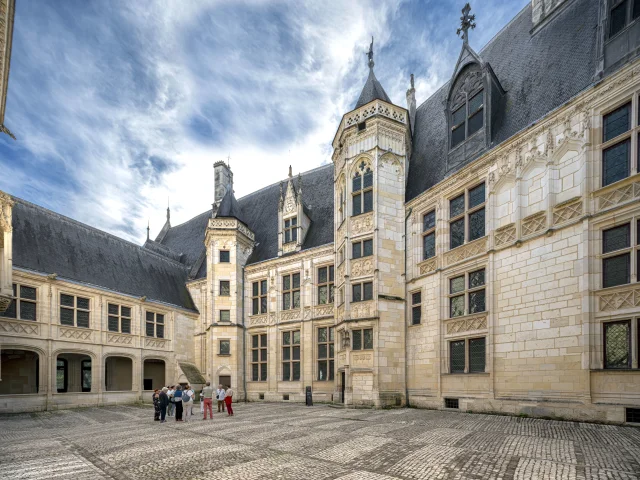
Palais Jacques Cœur|Patrick Tournebœuf-Tendance floue, Centre des monuments nationaux
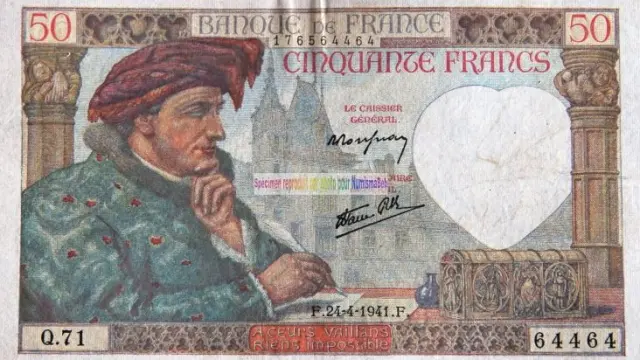
1940 50-franc banknote featuring Jacques Coeur
Find out more
The use of his name and likeness did not disappear with his death but grew as his legend took shape. In 1939, against a backdrop of patriotic mobilisation, the great figures of national history were featured on a new series of banknotes issued by the Banque de France. Following Sully and Bayard, Jacques Cœur and his palace in Bourges were chosen to feature on the new 50-franc banknote, which came into circulation in January 1941. The Resistance then humorously parodied the banknote to denounce the German Occupation and the Vichy regime’s collaboration.