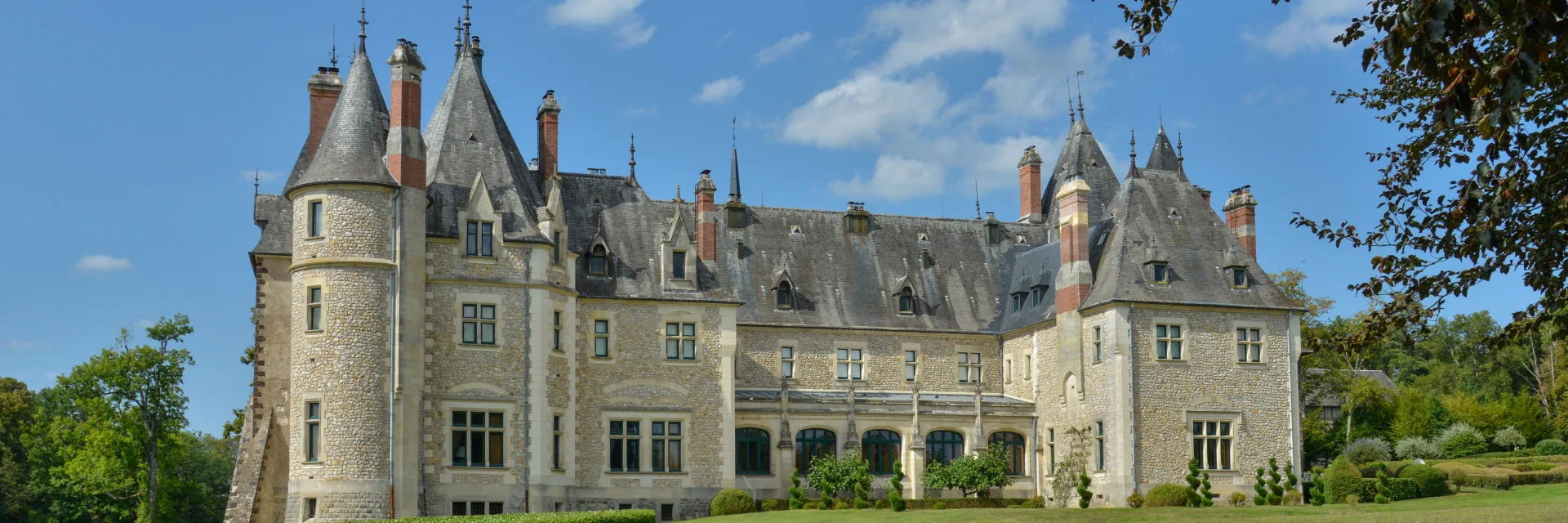
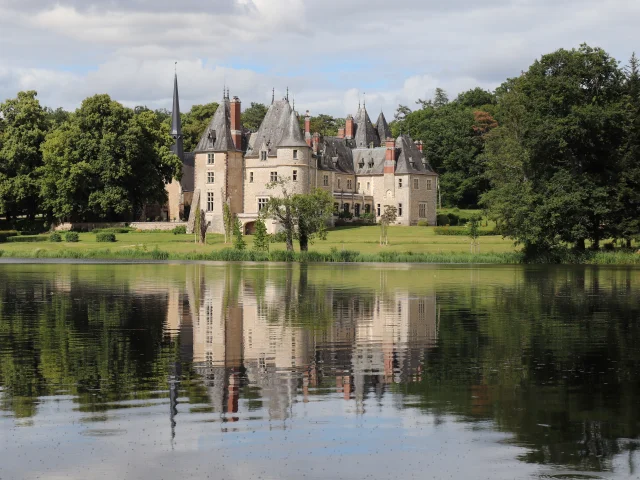
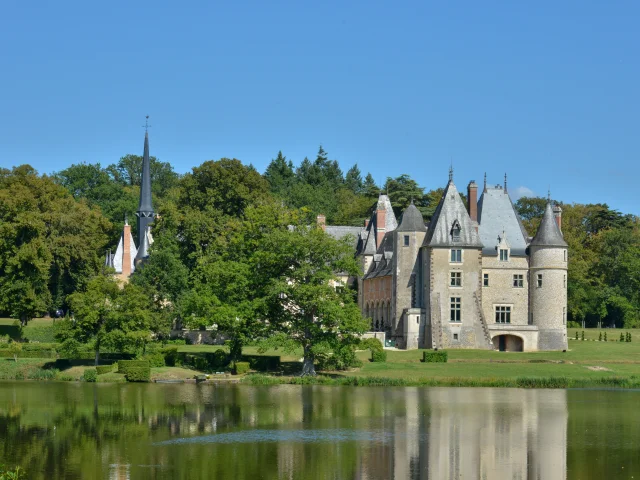
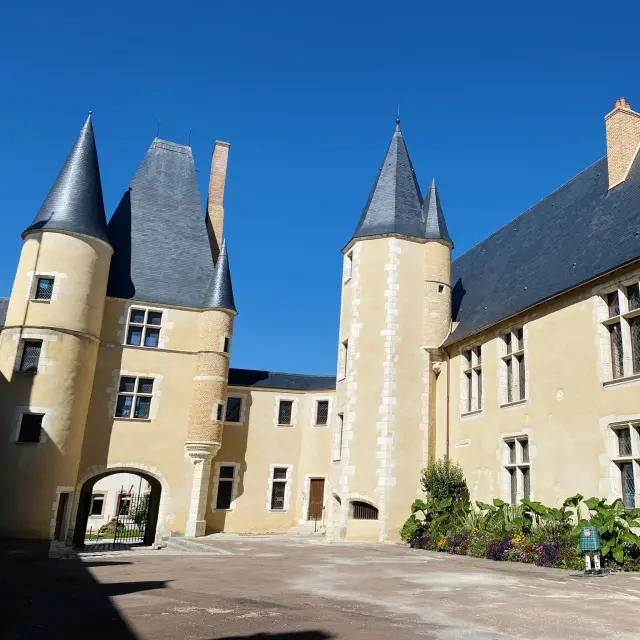
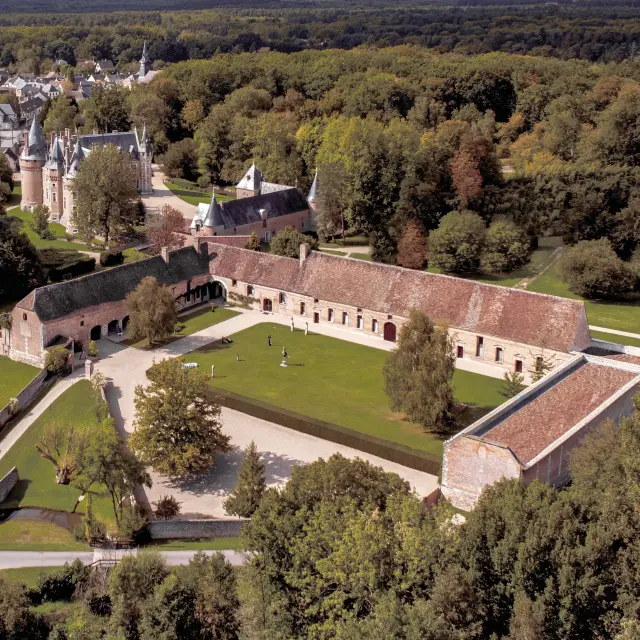
The land at Oizon belonged to the seigneury of Aubigny-sur-Nère, owned since 1421 by Jean Stuart, Constable of Charles VII’s Scottish army. Between 1495 and 1500, Bérault Stuart extended the old Verrerie estate to turn it into a pleasure residence set between forest and pond. This new construction involved the dwelling and the shell of the chapel. A few years later, around 1520, Robert Stuart undertook a second campaign of works: entrance work, decoration of the chapel and the south wing of the gallery framed by two pavilions.
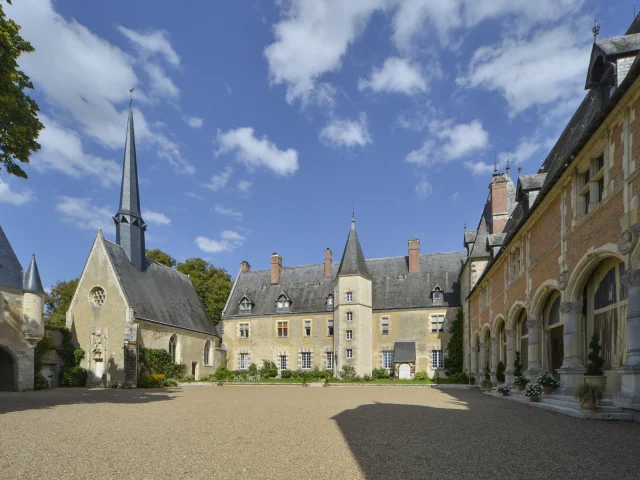
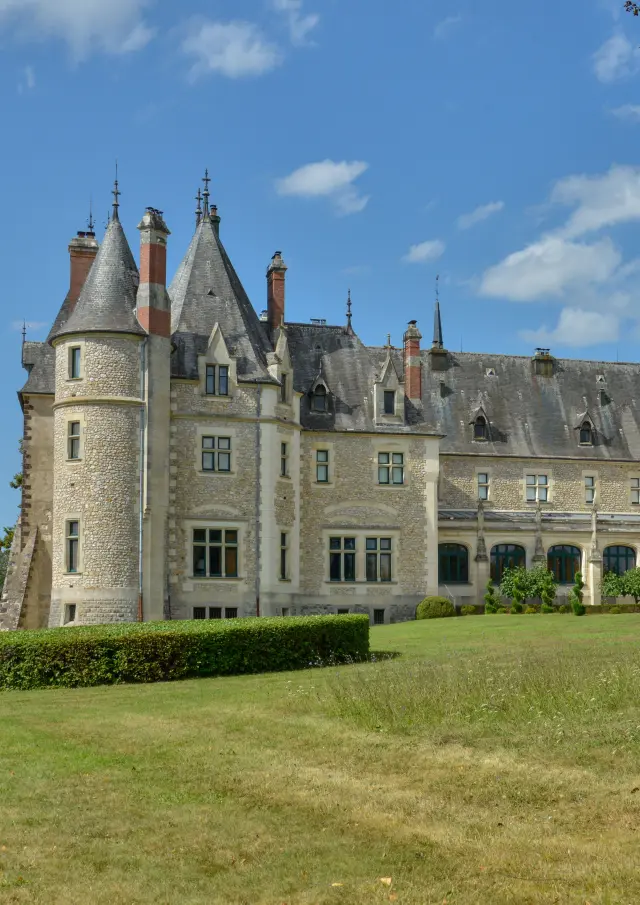
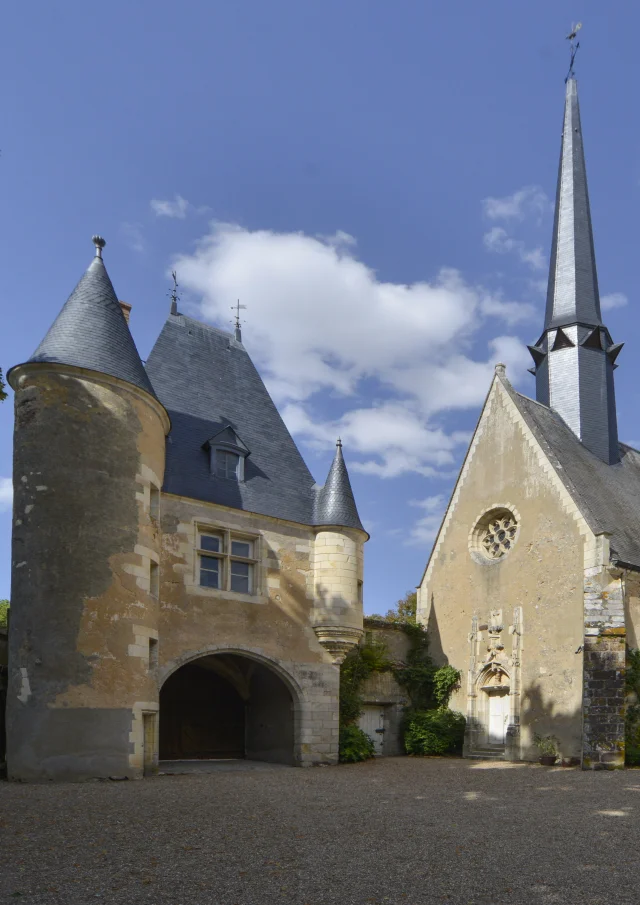
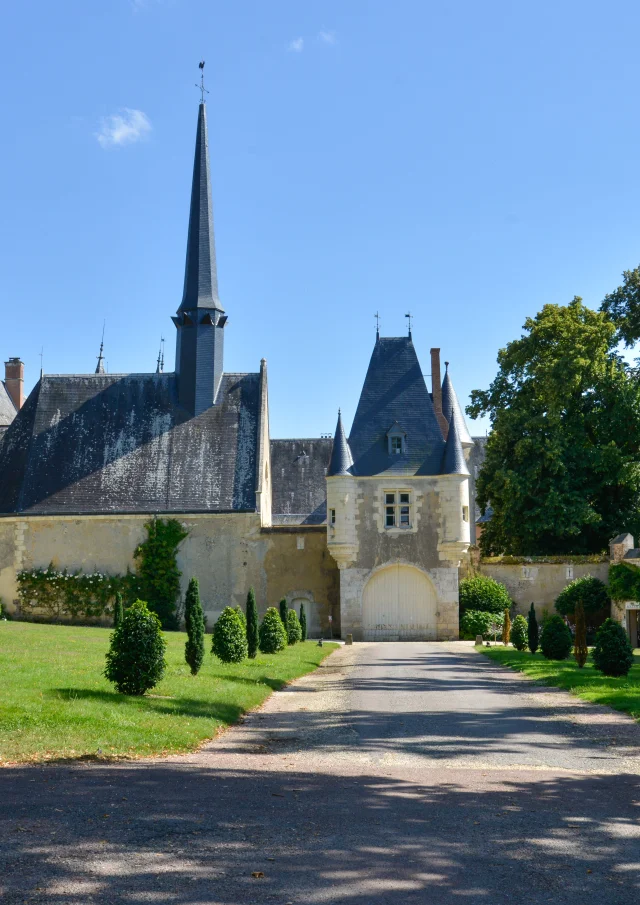
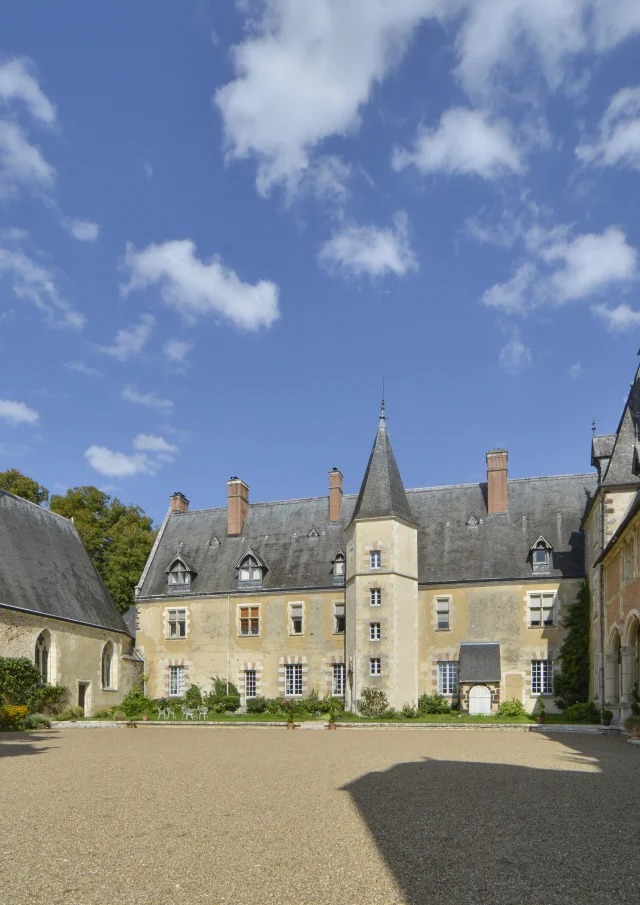
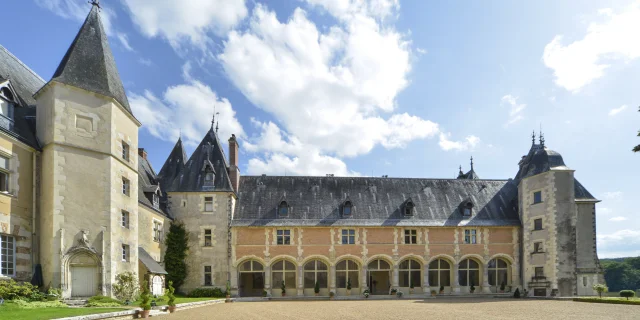
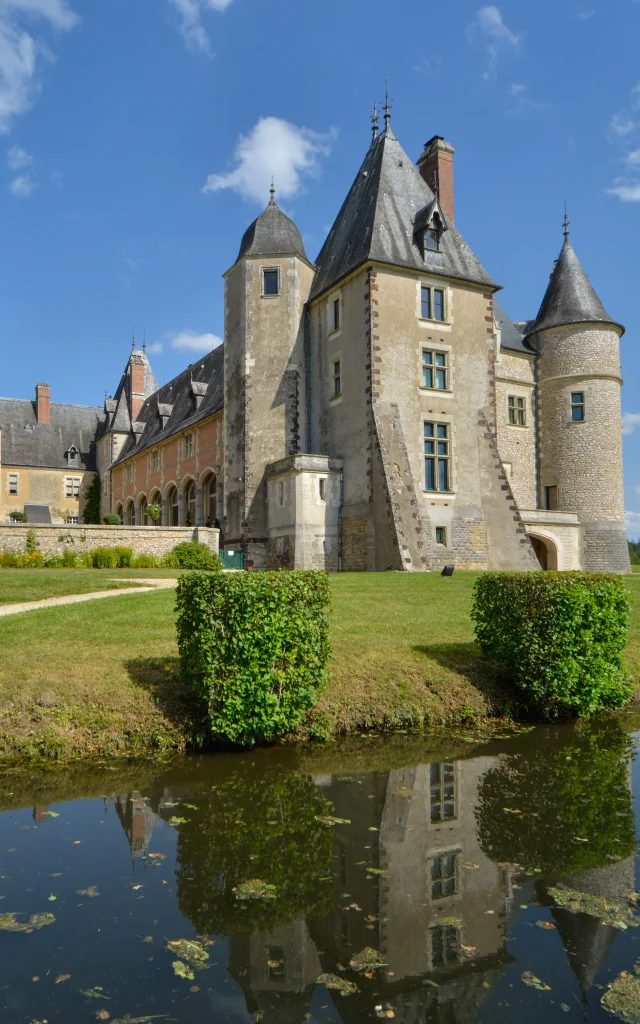
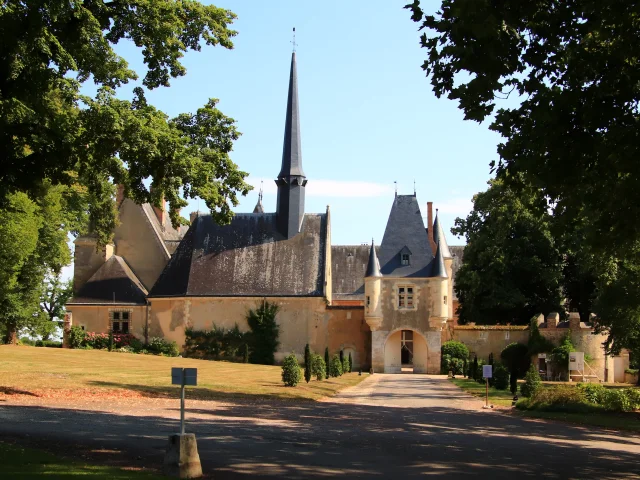
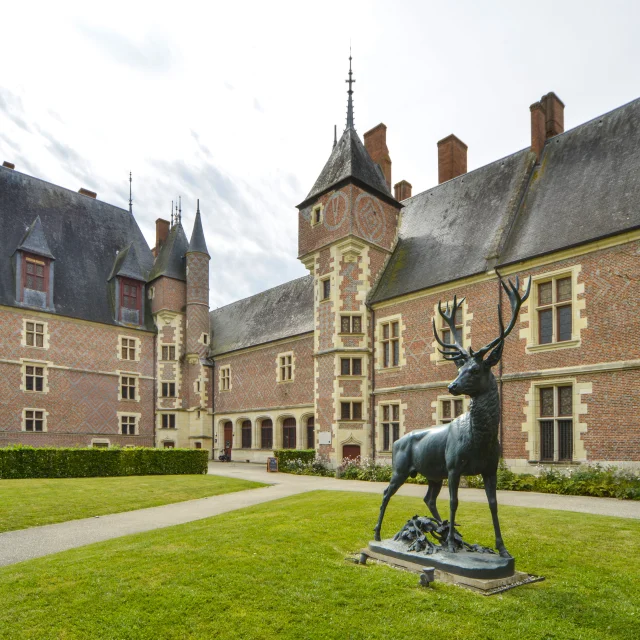
The rectangular dwelling has three storeys, with a hexagonal stair tower in the centre of the west facade. On the ground floor, on the east side, cross-headed windows framed by cross-headed mouldings can still be seen. The chapel, with its elongated floor plan and canted chevet, is built perpendicular to the dwelling. It is easily identifiable by its narrow slate spire and high windows with pointed arches and flamboyant infill.
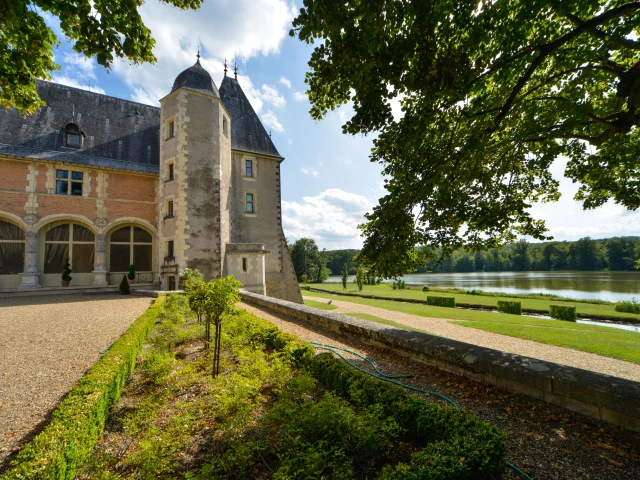
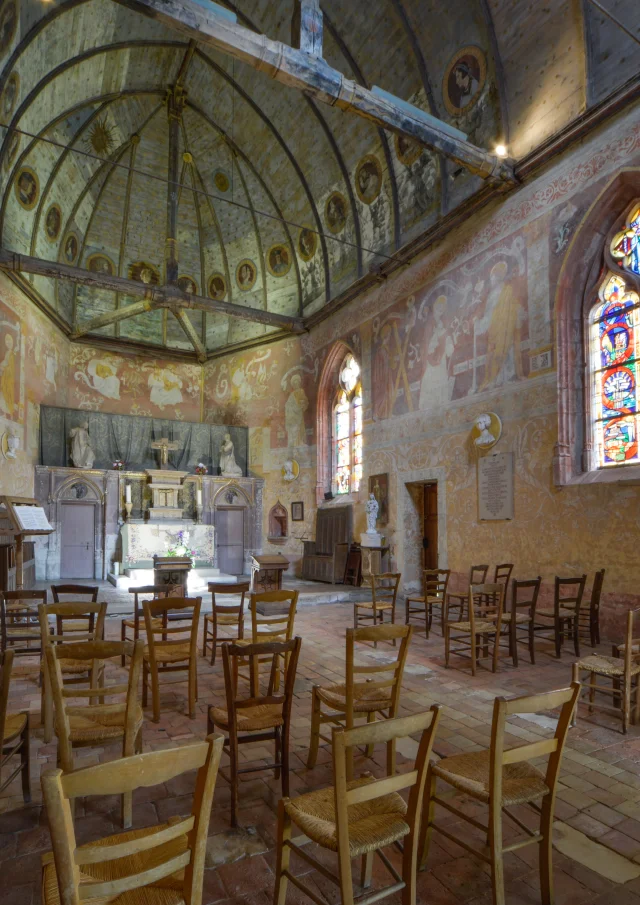
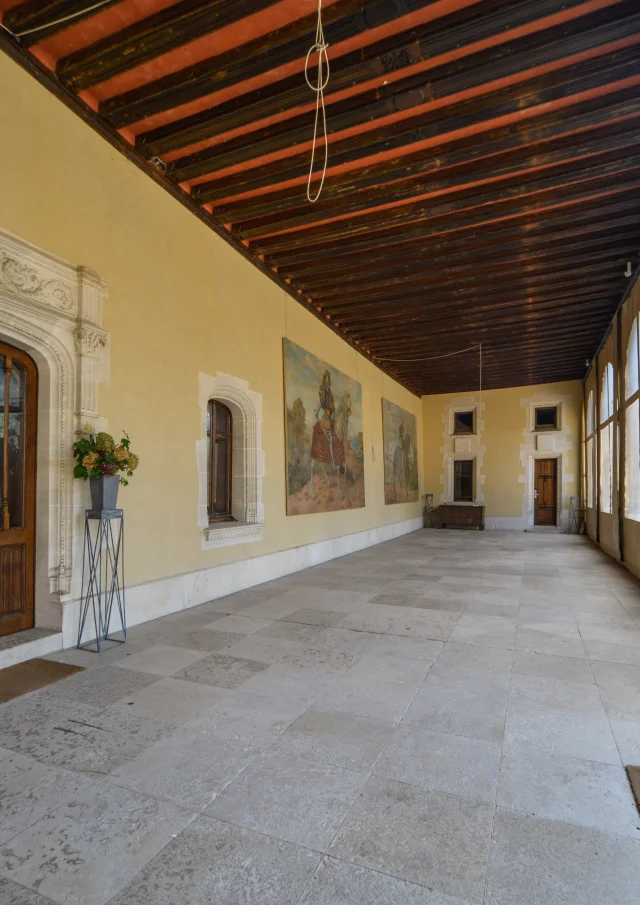
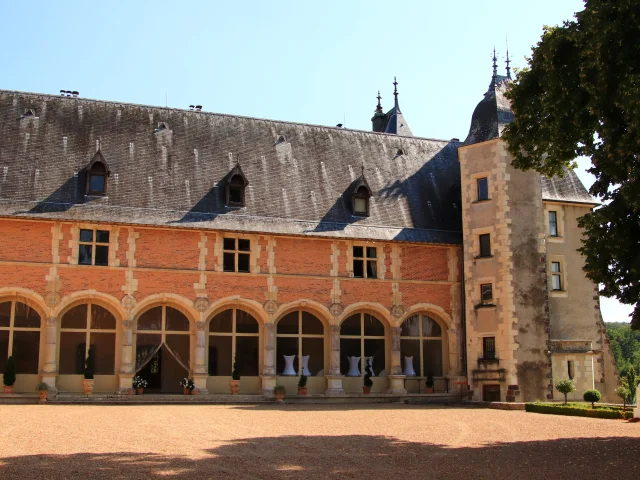
The doors to the stairway tower and the chapel are similarly decorated: basket-handle doors topped by a pointed arch forming a tympanum, framed by pinnacles and crowned by a bracketed gable, typical of the early 16th century. The panelled vault and the top of the chapel walls are painted with figures alluding to the patron’s family(Robert Stuart). The roofs of the dwelling and chapel have long gables and open gables. The new gallery, built in brick in imitation of the gallery at Château de Blois, has 9 semi-circular arches. Only the decorative elements are in stone: columns, arches, quoins and the surrounds of four windows.
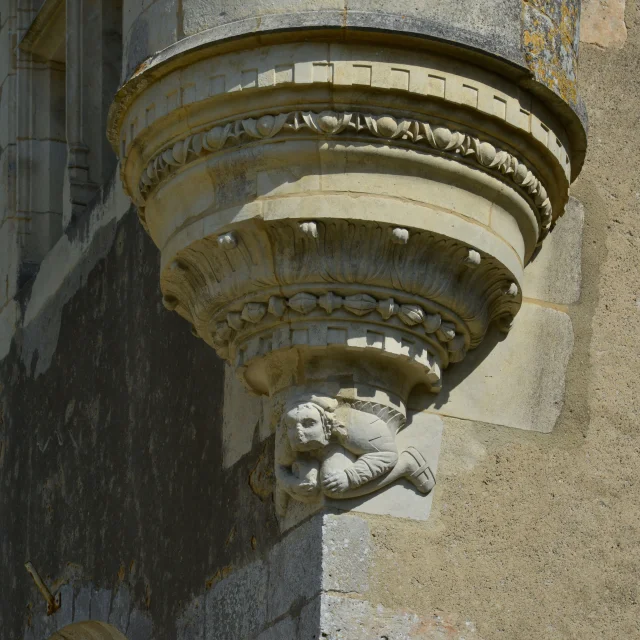
All the decorative elements (scrolls, arabesques, helices, garlands, medallions and pilasters) are typically Renaissance. A Flemish influence is suggested by the signature of Jan Van Waveren, found in two places on the first floor of the gallery. The stair tower in the south-west corner has an imperial roof.